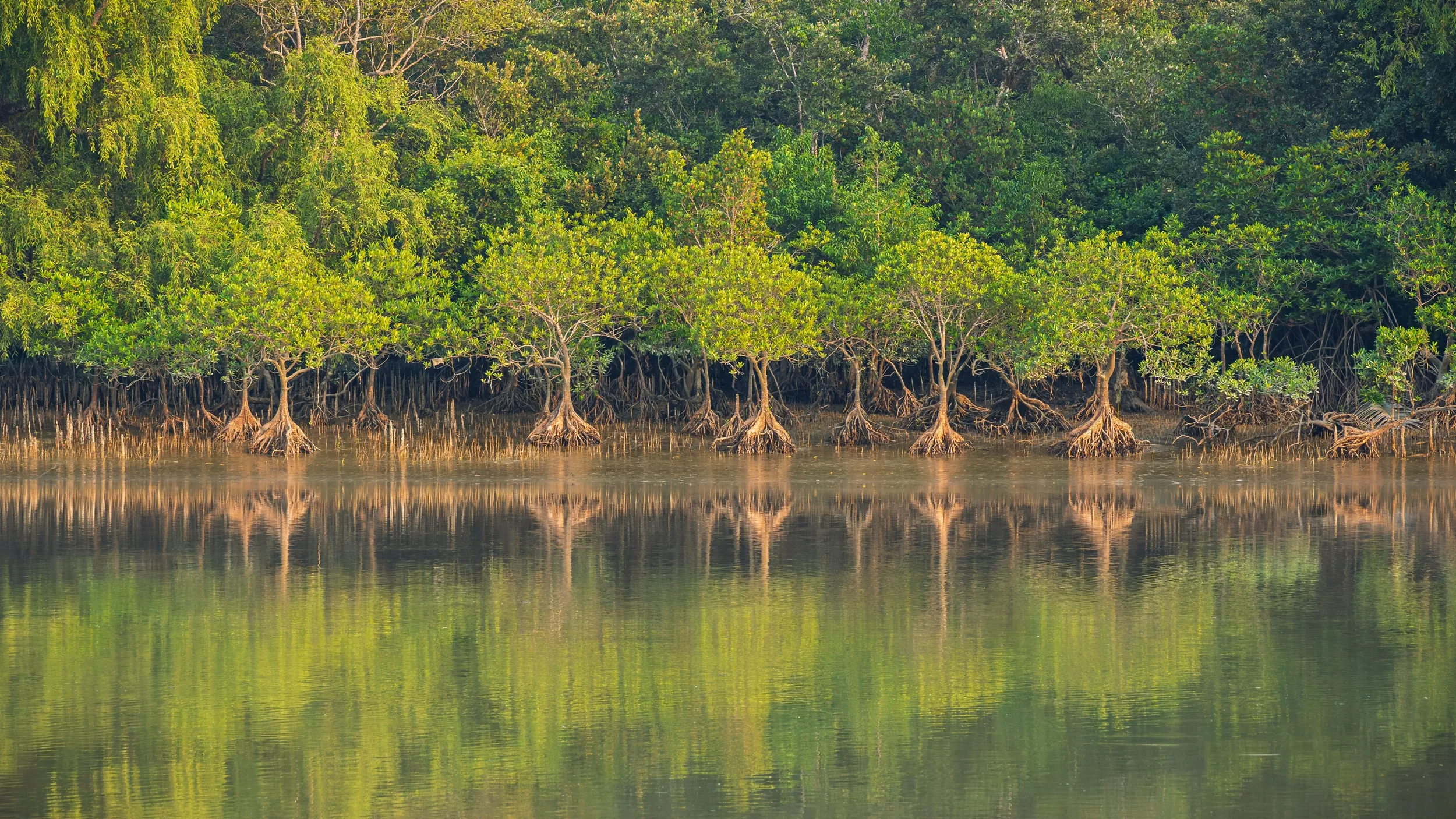
Mangrove forests and their haunting allure are everywhere in the world, including the USA. Mangroves have bizarre aerial roots that they use for breathing and protecting themselves from being washed away by strong tides. If you look at the trees while traveling by boat, they all seem the same.
But in reality, many different plant species are jumbled together to create this magical mangrove. Mostly confined to 30° N and 30° S, they are found primarily in the tropics of the world; 15% of the world's coastlines are covered by mangrove plants. Globally, mangroves protect about $65 billion worth of property from tidal surges and tropical storms.
But around 50% of the mangrove ecosystems are currently threatened due to an array of human-induced reasons, including upstream water diversion, logging, and shrimp farming. In addition, climate change poses threats as sea levels rise and the frequency and intensity of tropical storms increase; especially where freshwater flow is limited, mangrove plants are shorter, and the forests span shorter distances.
Still, mangrove forests are the ultimate bulwark against the rising sea and intense storms. The Sundarbans is a prime example: it has experienced at least five Category 4 storms while sustaining the entire forest and protecting millions of people from the tidal surges.
What is the Sundarbans Mangrove Forest?
The Sundarbans, which spans both India and Bangladesh, is the largest contiguous mangrove forest in the world. The forest formed where three great rivers, the Ganges, Brahmaputra, and Meghna, merged into one gigantic river, the third-largest river system in the world, creating the world's largest delta.
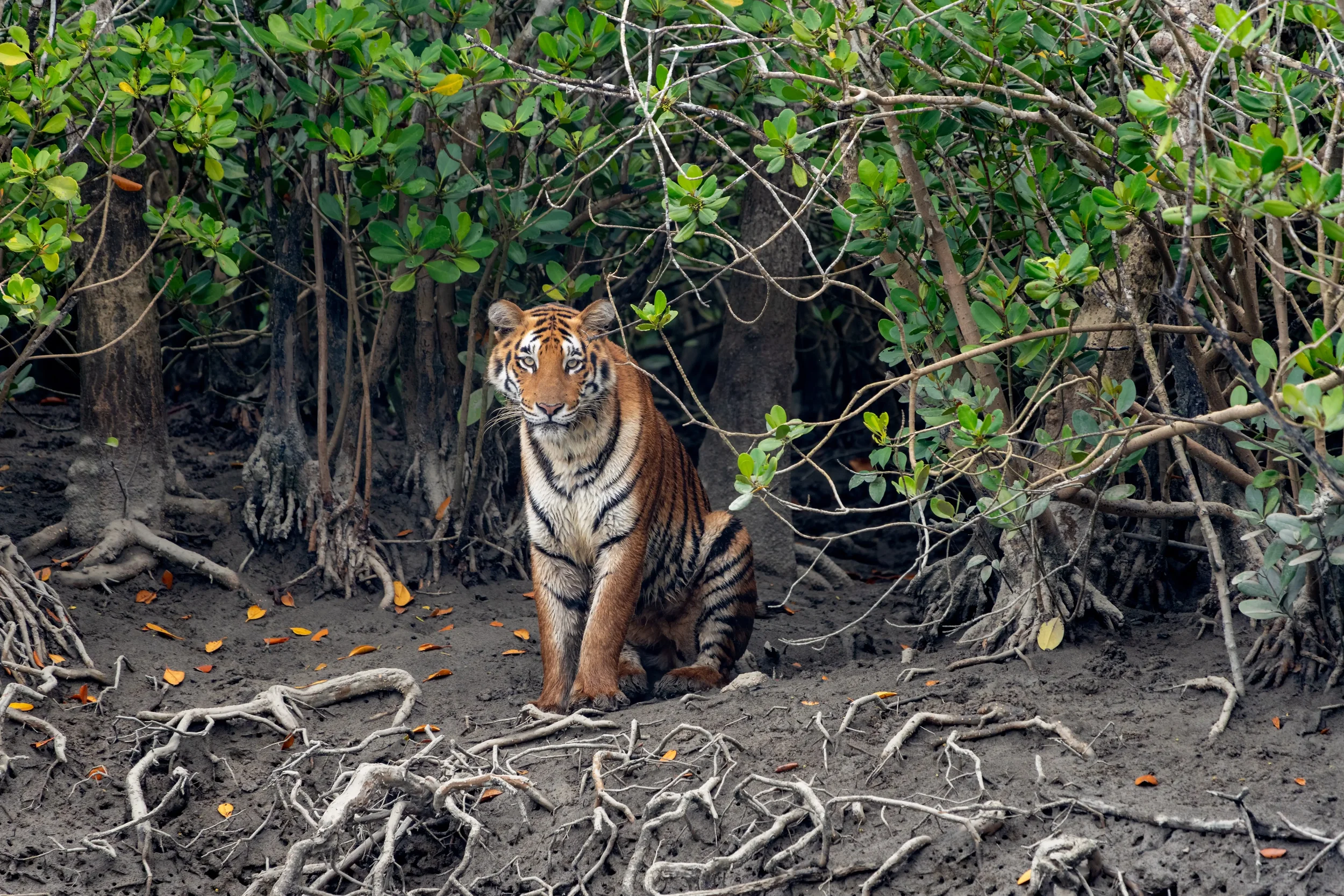
The Sundarbans is the only mangrove habitat that harbors a breeding tiger population. Unlike other habitats in the Indian subcontinent, the Sundarbans tigers tend to puzzle researchers and conservationists.
One reason is their ferocity and common appetite for human flesh. The other is their secretive nature. Whereas in many parts of the Indian and Nepali forests and plains, one may see tigers roaming around right in front of public eyes, in the Sundarbans, tigers usually hide behind the dense mangrove; we don't get to see them, but they see us.
Tigers and People: Two Thousand Years Side by Side
Humans, tigers, and the Sundarbans have shared an entangled history for at least two millennia. Many ancient human artifacts are still standing amidst these periodically submerged, salty mangroves. The Sundarbans may be the only place in the world where tigers and humans have lived side by side, and often collided, for the last two thousand years.
This actually explains tigers' extraordinary appetite for human flesh. Comparing other tiger habitats, for instance, in the mountains of Southeast Asia in Thailand, where two humans were killed by tigers in the last 50 years, there were at least 20 people killed by tigers every year in the Bangladesh part of the Sundarbans until 2012. Although human fatalities have become minimal in the Bangladesh Sundarbans since then, they still continue at a high rate on the Indian side.
My Work Studying and Protecting Sundarbans Tigers
I have been studying and working to protect this unique tiger population since 2007, first as a volunteer counting tiger tracks along the creeks, locally known as Khal. Ever since then, I have studied them in many different ways, including investigating tiger-human conflict, assessing prey species populations, enumerating tiger numbers, and devising strategies to protect them in their only mangrove home.
This is the second-largest tiger population in the world, after Corbett National Park in India, named after the first tiger conservationist who raised his voice to protect these large-hearted gentlemen. I have a deeply rooted connection with Jim Corbett and all of this writing, but that's for another day.
Our First Sundarbans Trip Together
Today, let me tell you how it went for my wife, my partner, and the CEO of EWT, Liz, on her very first journey to the mythical mangrove of the Sundarbans. Hoping to see a “wild tiger” (which hardly even happens here), she was excited to see all the other wildlife this forest has to offer.
Starting in Khulna: Permits and Rangers
Liz and I started our first joint Sundarbans trip in the city of Khulna, a divisional capital of Bangladesh in the southwest. A colonial relic that has expanded with many modern buildings, including residential areas, the city hosts some of the premier educational institutes of the country.
Khulna is where the Bangladesh Forest Department has its Sundarbans headquarters, a building from the 1870s when the British Colonial rulers established their first forest department, with the Sundarbans as one of their key first areas of focus.
Liz and I met one of my old colleagues there; we needed to collect our entry permit as well (pre-arranged by me). And, because of my work in the area, officers were nice enough to offer me one of their best rangers to accompany us during the trip. A forest ranger is required on all tourist boats venturing through the canals.
Aboard the Mawali: Tides, Fishers and Kalabogi
We boarded a small wooden boat named “Mawali,” a local word that means honey collector. There were six of us, including the captain of the boat, a chef, the ranger, a young assistant whose job was basically handling every chore, and us. Oh, I forgot to mention it was a very hot and humid day!
The temperature was in the mid-90s Fahrenheit with almost 90% humidity. Once we started our journey, it took us around four hours to reach our first post in the Sundarbans, Kalabogi, which literally means black egret, where we anchored for the night.
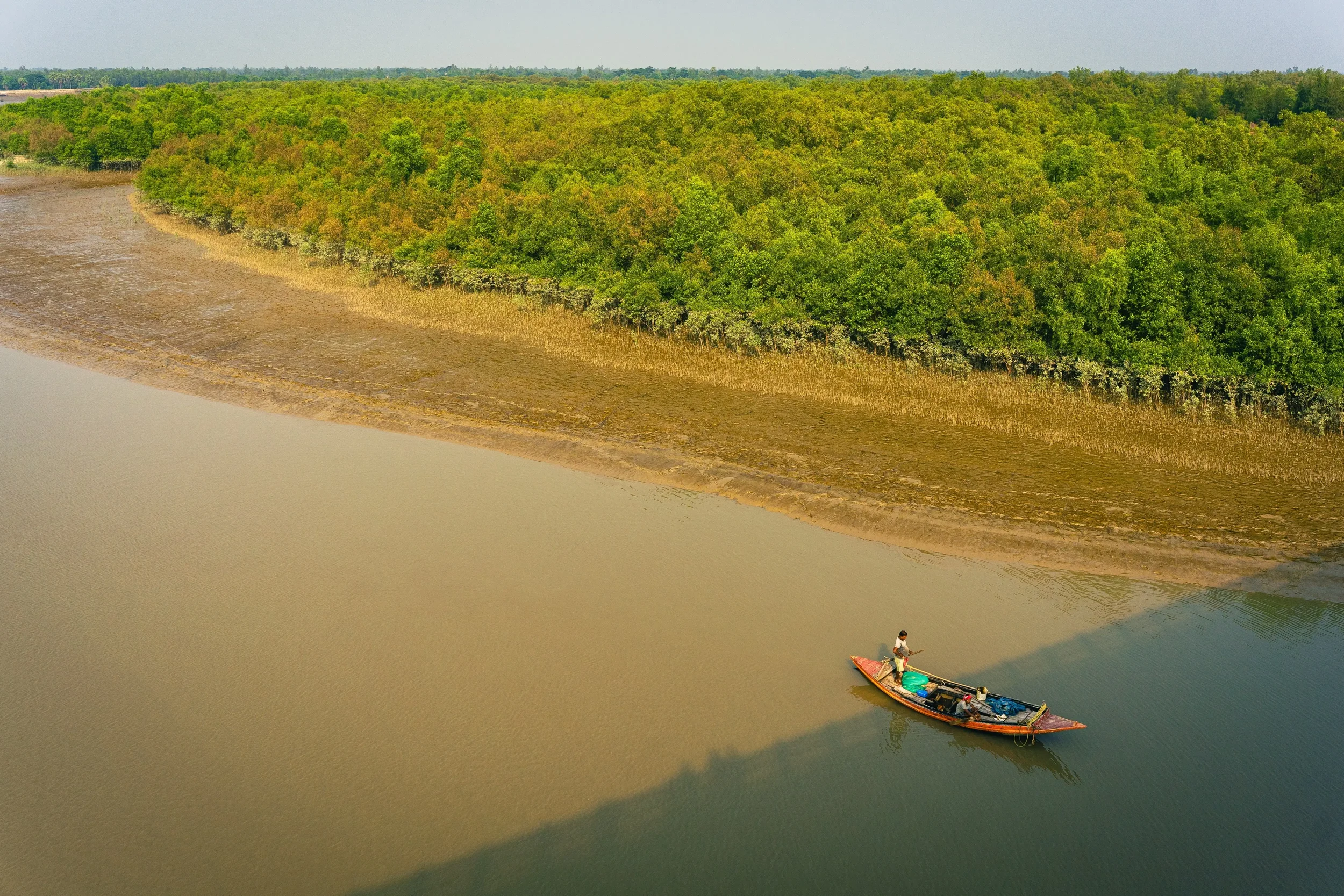
And the next day, quite early in the morning, Liz got to glimpse the Sundarbans for the first time. It was almost the middle of the low tide, so the water level was quite low, and the fishers were setting their nets for the next high tide.
Tides come and go in a six-hour cycle on a normal day, but the peak of the high tide, the nadir of the low tide, and the strength of the current depend on the lunar cycle; it was right after the full moon of the month, so it was spring tide, when the tide fluctuates more intensely than neap tide.
Fishers set nets on the banks of the Khal so that the strong current during high tide forces fish to entangle in their net. A couple of hundred thousand people rely on such fishing techniques for their livelihood.
Sundarbans Wildlife: Birds, Masked Finfoot and Kingfishers
Mornings in the Sundarbans are full of animal activity, especially birds, monkeys, and other diurnal species. The Sundarbans hosts 250 species of birds, many of which are globally threatened, and some are only visible here in the Sundarbans.
Masked Finfoot is one of those highly rare species of gorgeous birds that thrives in the Sundarbans, but only in the Bangladesh Sundarbans. They need a low-salinity water habitat with a slightly higher-elevation shoreline where they can build their nests. There are only three species of finfoots in the world, and here in the Sundarbans one may get to see one.
This often requires meticulous planning and a little bit of luck. We did plan well, but unfortunately luck didn't work in our favor; the tide had turned, so the Masked Finfoot took refuge in their riverbank nests, maybe tending to its chicks.
The Sundarbans also harbors nine species of kingfishers, and Liz fell in love with the Brown-winged ones; they are a magnificent and large species of kingfishers, highly visible and often active during the daytime to catch their prey, which is abundant here in these extremely rich water bodies.
The Kali Temple at Shekhertek
After an unpleasantly hot, yet fun, wildlife trek along the elevated trail in Kalabogi, we headed toward Shekhertek, another tourist area in the Sundarbans, famous for its medieval ruins, especially the only surviving nearly intact building, which is popularly known as a Kali Temple. Kali is the Hindu Goddess of power.
This temple was most likely built in the 16th century, when people used to live inside the current Sundarbans. It was most likely an outpost of a fort or a tax collection center, where rulers used it for collecting revenue from wood, salt, and honey collectors.
Recently, the government has renovated the temple and built a nice elevated walkway, which makes it accessible for anyone who wants to visit. The first time I visited the temple was in 2009, and it was a daunting trek through knee-deep mudflats; the search took around a couple of hours before reaching the temple! Liz and I simply took an afternoon walk through the trees, onto a walkway.
Dolphins in the Sundarbans
The Sundarbans hosts four species of dolphins and porpoises, including the highly endangered Gangetic River Dolphin, which is one of the relics of early cetacean evolution. Both Gangetic and Irrawaddy dolphins are threatened with extinction, and the Sundarbans harbors one of the largest intact populations of the Irrawaddy dolphin, which is named after the Irrawaddy River in Myanmar.
It's quite easy to see dolphins, as they come out every few minutes to breathe, and one may see them with ease in one of the numerous river confluences while traveling through the Sundarbans.
More Wildlife, and Coping With the Heat
Over the next couple of days, we traveled through many parts of the Sundarbans and got to see many species of wildlife, mostly birds, chital (spotted deer), monkeys, otters, dolphins, red jungle fowl, and another globally threatened bird named the Lesser Adjutant. We also tried to cope with the heat: Liz spent hours each day hunkering down inside the cabin with the air conditioner; it was brutal, even for me, who is from the region.
Can You See a Tiger in the Sunderbans?
As I mentioned earlier, tigers are truly wild here. During my research, my camera recorded a tiger and a tourist boat moving side by side, but the people in the boat were totally oblivious to the presence of the apex predator that they wanted to see.
Finding a tiger here is a true adventure, which needs an extreme level of patience, planning, and luck. Only a few people know the techniques to find one, and even fewer have the time or resources to pursue such an adventure.
Best Time to Visit the Sundarbans, and Where to Stay
The good news is there are some high-end luxury accommodation ships in the Sundarbans with full air conditioning and en suite bathrooms. I am good friends with many of these operators and Liz has conceded that an EWT safari should be in January or February, when the temperatures are twenty degrees cooler than in August and September.
Why Visit the Bangladesh Sundarbans With EWT?
Bangladesh has a thriving domestic tourism industry, but the government and local destination management companies (DMCs) have done very little to attract the type of foreign tourism thriving in India, Sri Lanka, Thailand, and even Nepal. We want to bring the wonders of Bangladesh, especially the unique pull of the Sundarbans, to you before everyone else in the Western world jumps on board.
And, with proper guidance from a local and tiger expert, one may have the true adventure of a lifetime in this magical mangrove, and maybe even see one of the truly wild tigers left in the world!