How to See the Real Great Migration
For years I’ve explained that the best great migration is on the southern plains of the Serengeti at this time of the year. Specifically, southwest of Mtiti where the Kusini Plains intersect the Keskesio Valley.
No secret. We’re talking around 150,000 animals which is about the limit anyone can see horizon-to-horizon standing on a flat plain. When we set up the lunch tables and chairs on these plains the wilde give us a wide circle but never enough to cut out views of constant birthing. These are the calving fields, after all.
And for years and years and years no one else joins us. We’re alone in the middle of the greatest wildlife spectacle on earth.
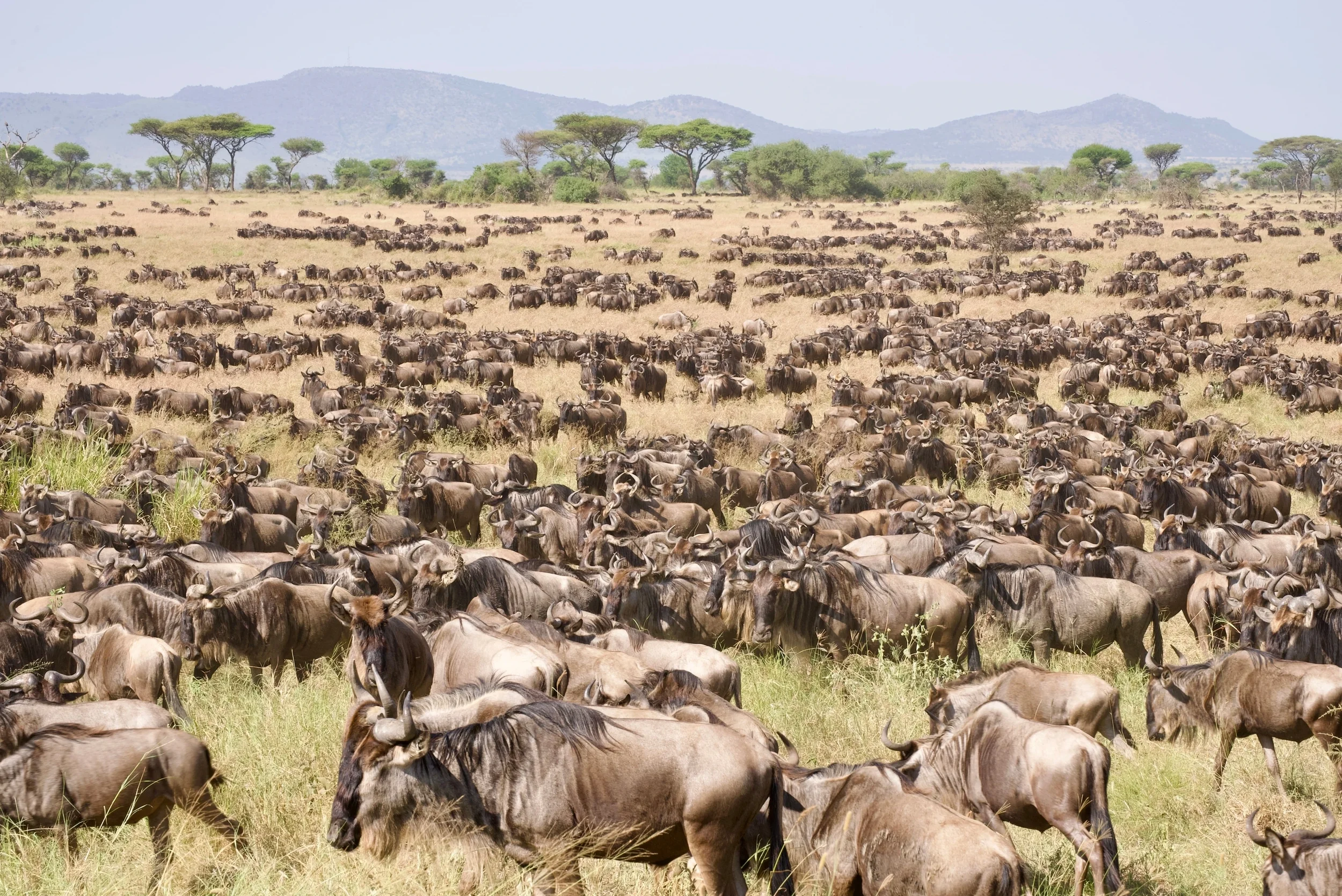
Off the “normal” track
Other tourists don’t venture here because it’s way off the normal track. That just doesn’t cost more in fuel and time but in real effort and veritable enthusiasm for the wild. You’ve got to have drivers who aren’t afraid of getting stuck, because they know how to get unstuck. You need multiple vehicles for safety. 99% of “great migration tourists” drop their jaws when they see a couple thousand and post on Instagram they’ve seen the migration. How lame.
Location, not brand
Most popular itineraries stick to one or two property groups, because that gives you the best value and because it’s the simplest way to book. My safaris are governed by location. There isn’t an &Beyond, Elewana, Serena, etc. property in every right place. They are all good companies in their own right, but not mixing them up and including such important stand-alone properties as Ndutu Lodge insures there will be no optimum experience.
By using the downmarket Marasa properties in Kenya’s Aberdare, we saw a highland forest in all its glory and a bunch of great local animals like the giant forest hog and bushpig, plus a plethora of spectacular birds and monkeys. By using the super upmarket property Saruni in Samburu we saw a spectacle of desert landscape unmatched anywhere on earth, and saw some of the rarest animals left on the planet: the reticulated giraffe, gerenuk, Grevy’s zebra and blue-legged ostrich.
Authentic Tanzanian experience
Staying at least at one non-game property (I like Gibb’s Farm) facilitates a real contemporary Tanzania safari experience, not the scam villages pretending to be Maasai. Real schools, real towns, and all from one of the world’s most splendid resorts. A really important downtime for wildlife viewers and a further inspiration to those seeking a broader optimum experience.
Timing the rains
You’ve got to stay in the Ndutu area when the heavy rains begin. This time I stayed for three days and as always, at Ndutu Lodge. The lodge is a really fine but only a mid-market stand-alone. Can’t chance a tented camp during the rains. (Rains are sporadic, short and heavy, which is the reason the wilde are here to calve.)
Understanding local politics & history
How can you come into this precious wild without understanding just a bit about the local politics and history that will either guard this part of the world or ransom it for modernity? You can do this well in Nairobi or Zanzibar. You then see Africa from its glorious sometimes troubled past and brilliant present.
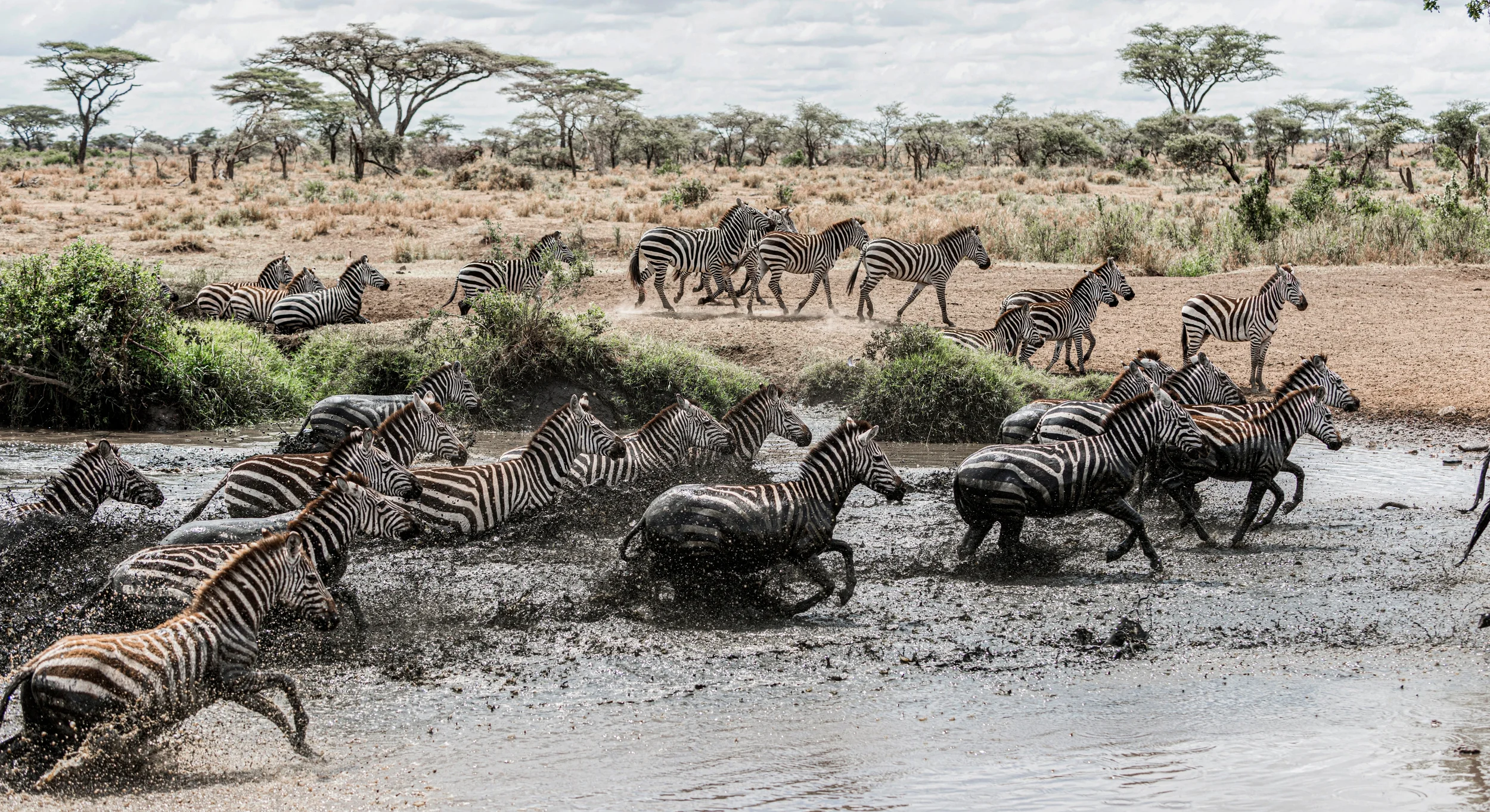
There is “no single way” or “single route” that is good year after year, because there are years of droughts and years of floods, and then terrible surprises like Covid. Times change. The wild is too precious to slap together as a carbon copy of a past success. It takes lengthy experience and then some instant finesse to choose all the right places to stay.
It takes the courage to buck what any given year ranks as popular or trendy. It’s an art and science combined, and people who understand that have become my clients, which makes guiding them sweet and memorable. We all want the same thing: magical inspiration and a renewed hope that this wild will survive.
Ready for a different kind of journey?
The wild doesn’t follow a script, and neither should your itinerary. If you’re looking to experience a journey defined by authentic locations, we’d love to help you plan it. Inquire today to see how we combine decades of experience with a deep respect for the land to create a truly memorable bespoke East Africa safari trip.
-
The peak calving season typically occurs between late January and March on the southern plains of the Serengeti and the Ndutu area. This is when hundreds of thousands of wildebeest gather to give birth, offering one of the most intense wildlife spectacles on earth.
-
The "short rains" are what bring the green grass that attracts the herds, making it a vital time to visit. However, it requires multiple 4x4 vehicles and expert drivers who are experienced in navigating muddy terrain. Staying in a permanent lodge rather than a tented camp during these sporadic heavy rains ensures a more comfortable and secure experience.
-
Unlike the more crowded northern routes, the southern plains (specifically southwest of Mtiti) offer a sense of vast isolation. Here, you can witness the migration "horizon-to-horizon" without the distraction of dozens of other tourist vehicles, providing a much more authentic and private viewing experience.